EN
The Printing Process
For me, a photograph is not complete on the screen. Printing gives it a physical presence: its scale, the surface of the paper and the way it responds to light become part of the experience of the work.
I make my paper prints myself, carrying the decisions made during processing through to the finished print.
From screen to print
- Selecting the paper according to the photograph’s tonal qualities, color and texture.
- Making the final adjustments for the chosen paper and print size, using test prints where needed to assess the result.
- Producing the print and checking it for defects or marks, reprinting when necessary.
- Signing and numbering the print by hand, and adding the title except on the smallest formats (size A). Depending on the paper, a graphite pencil or an archival pigment-ink pen is used.
- Applying a protective coating suited to the paper and print.
- Preparing a signed, dated and sealed certificate of authenticity that identifies the photograph, printing materials and edition. Its unique identification number corresponds to a tamper-evident holographic label attached to the back of the print.
- Carefully packaging the print and certificate for shipping, with larger prints protected by sturdy tubes.
The certificate is supplied in a protective sleeve and can be kept separately or attached to the back of the framed work.ES
El proceso de impresión
Para mí, una fotografía no termina en la pantalla. La impresión le da una presencia física: su escala, la superficie del papel y la forma en que responde a la luz pasan a formar parte de la experiencia de la obra.
Realizo personalmente mis impresiones sobre papel, trasladando las decisiones tomadas durante el procesado hasta la impresión final.
De la pantalla al papel
- Seleccionar el papel en función de las cualidades tonales, el color y la textura de la fotografía.
- Realizar los ajustes finales para el papel y el tamaño elegidos, recurriendo a pruebas de impresión cuando es necesario para valorar el resultado.
- Imprimir la fotografía y comprobar que no presenta defectos ni marcas, repitiendo la impresión cuando sea necesario.
- Firmar y numerar el ejemplar a mano y añadir el título, salvo en los formatos más pequeños (tamaño A). Según el papel, se utiliza un lápiz de grafito o un rotulador de tinta pigmentada de calidad de archivo.
- Aplicar un recubrimiento protector adecuado para el papel y la impresión.
- Preparar un certificado de autenticidad firmado, fechado y sellado, que identifica la fotografía, los materiales de impresión y la edición. Su identificador único coincide con el de una etiqueta holográfica de seguridad adherida al reverso de la obra.
- Embalar cuidadosamente la impresión y el certificado para su envío, utilizando tubos protectores resistentes para las obras de mayor formato.
El certificado se entrega en una funda protectora y puede conservarse por separado o fijarse al reverso de la obra enmarcada.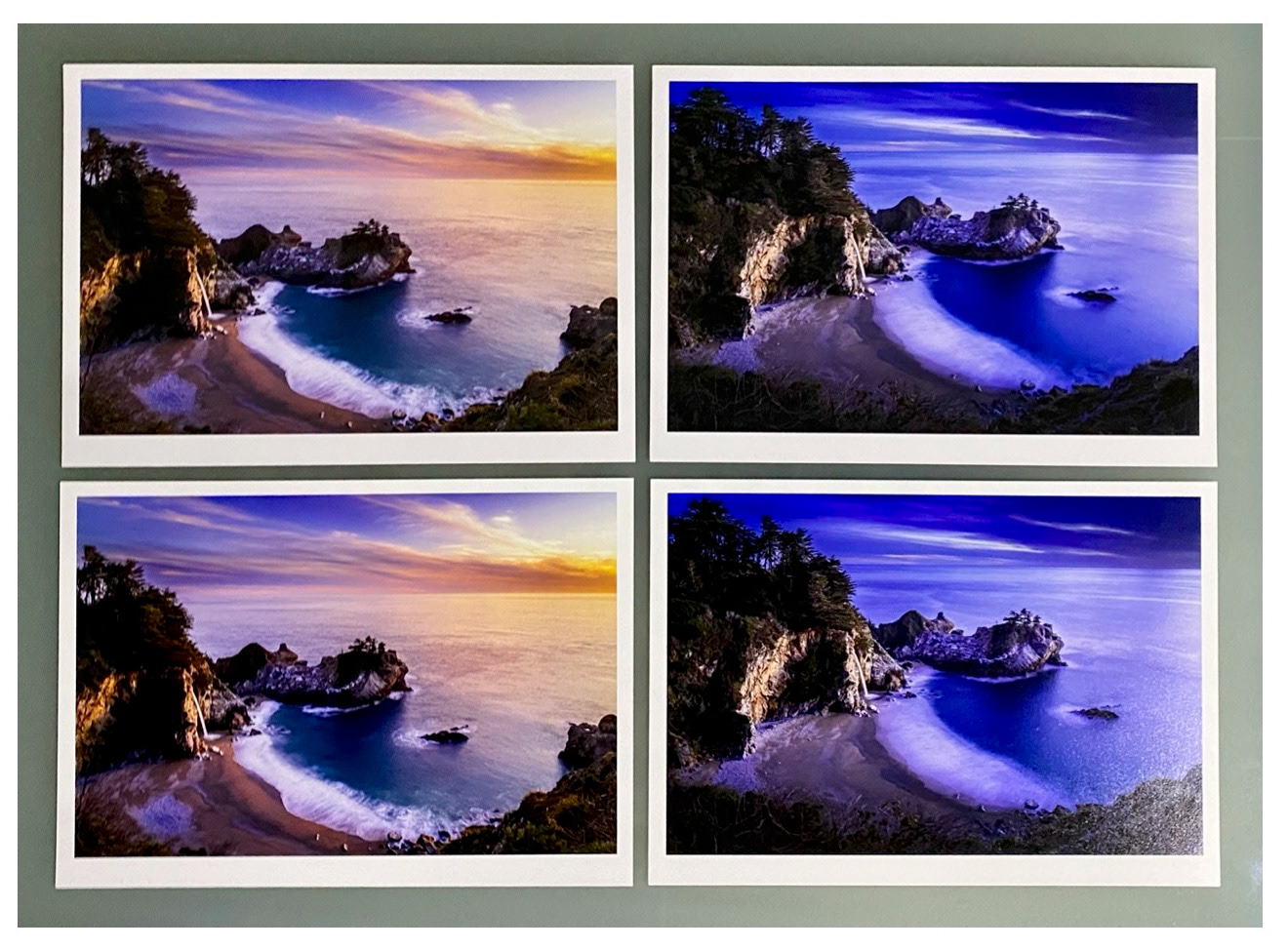
Test prints on different papers
Pruebas de impresión en distintos papeles
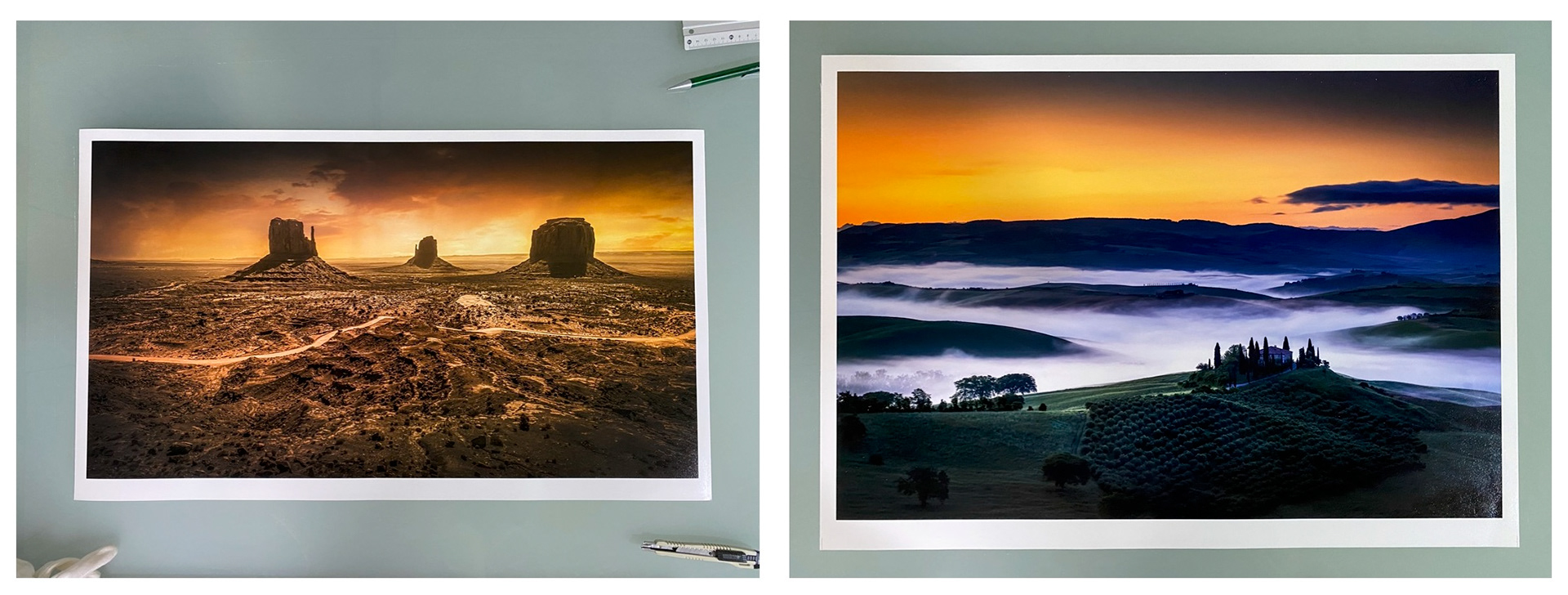
Color prints before titling, numbering, signing and protective coating
Impresiones en color antes de añadir el título, la numeración, la firma y el recubrimiento protector
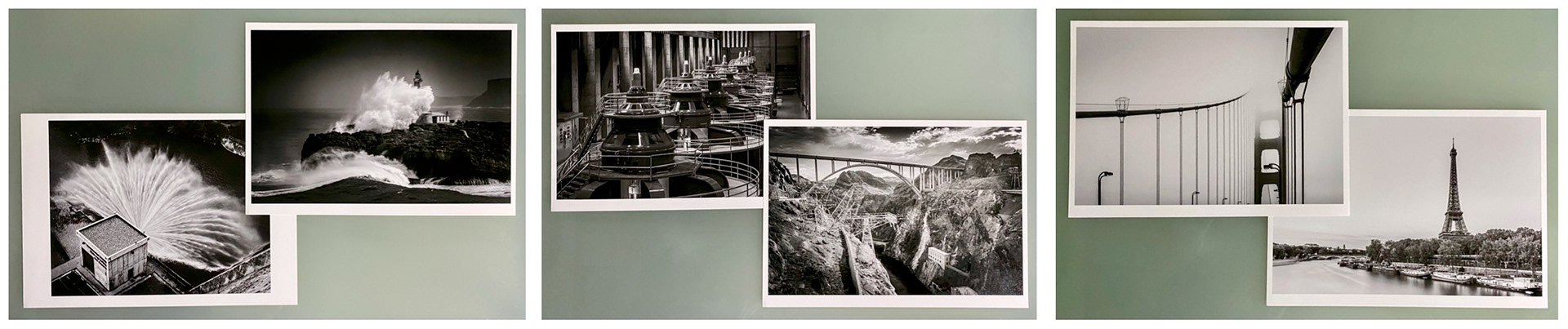
Black-and-white prints in preparation for an exhibition
Impresiones en blanco y negro en preparación para una exposición
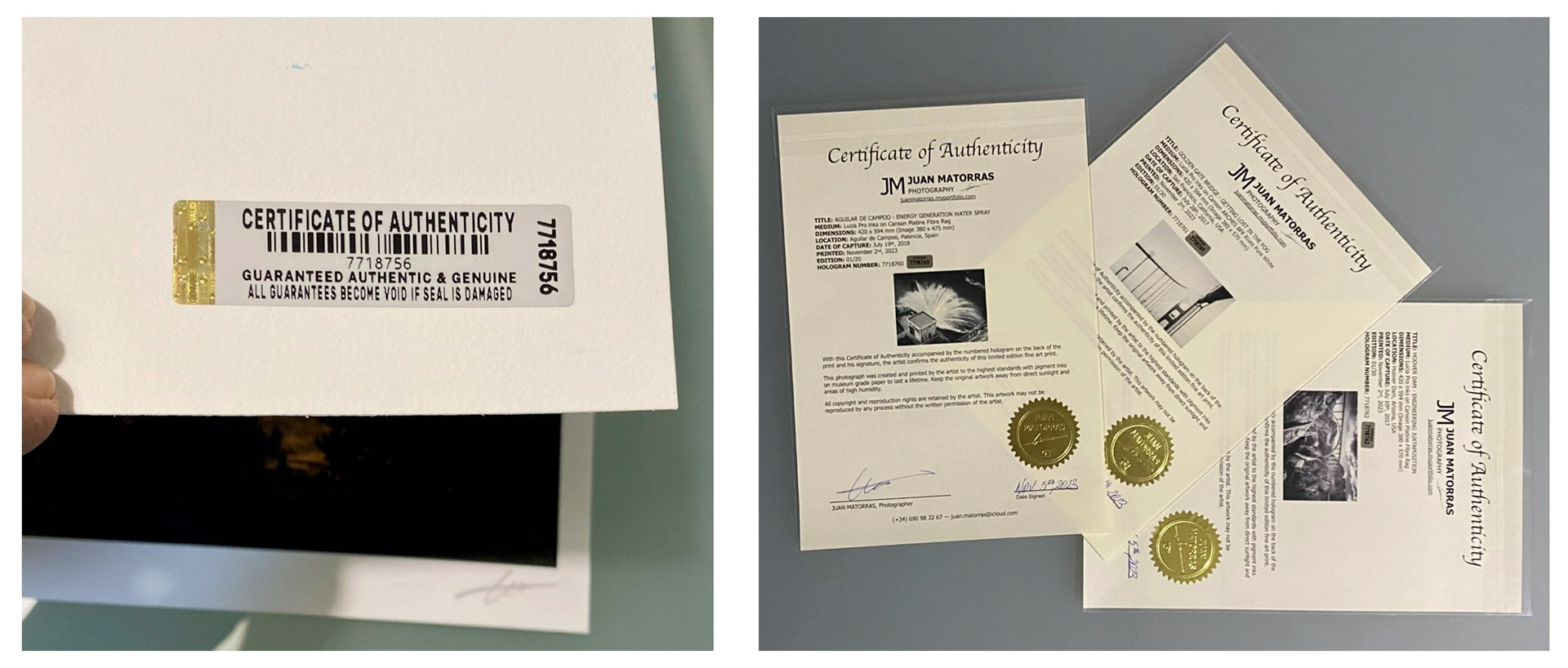
Tamper-evident identification labels and signed certificates of authenticity
Etiquetas de identificación que permiten detectar manipulaciones y certificados de autenticidad firmados
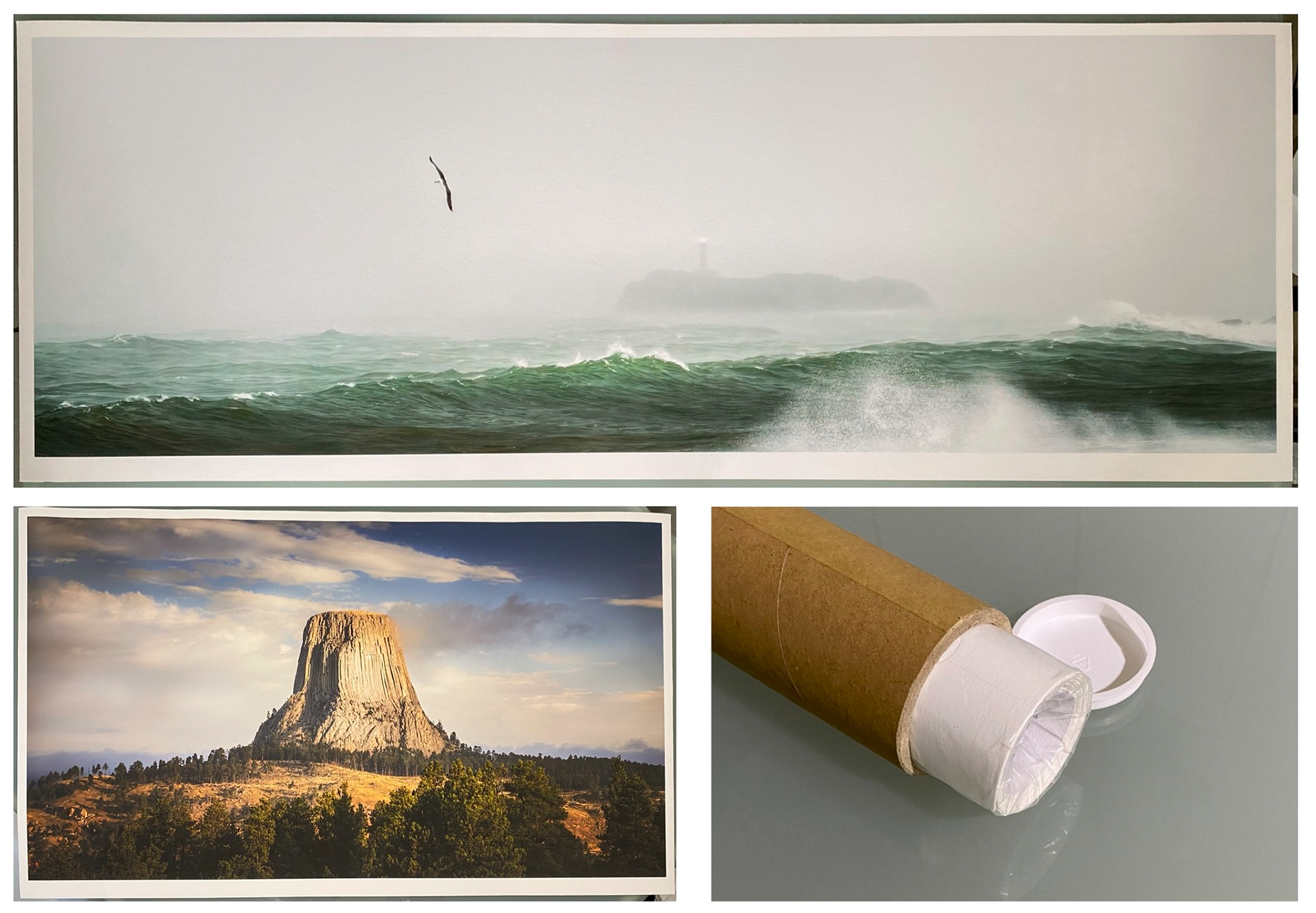
Large prints and protective packaging for shipping
Impresiones de gran tamaño y embalaje protector para el envío